
How to Treat Minor Injuries Using the RICE Method
Brian Acton
If you’ve ever suffered a minor injury like an ankle sprain, achy knee, or muscle strain, you’ve probably employed at least some steps in the RICE method to treat the injury at home. The RICE method is a time-tested, simple strategy you can use to treat minor injuries at home, relieving pain and reducing swelling.
RICE stands for rest, ice, compression, and elevation. Here’s how each step works.
- Rest
Your injury needs time to heal. You may be tempted to head right back to the gym or just go about your everyday business, but rest will be much better for you in the long run. Jumping back into normal activities can cause you to exacerbate your injury or prolong the time it takes to recover.
Rest as much as you can and avoid putting weight on your injury for at least 24-48 hours. While you rest, you can use our Adjust-A-Loft™ Pillow to fully control how much neck support you’re getting.
- Ice
Applying ice to your injuries alleviates pain and swelling by increasing numbness and slowing down blood flow. Cold therapy is particularly suitable for injuries sustained in the last 24 - 48 hours. The solution can be as simple as ice and a washcloth, or you can use a cold pack like the Core® Clover Pack™, which can be thrown in the freezer and pulled out whenever you need it.
- Compression
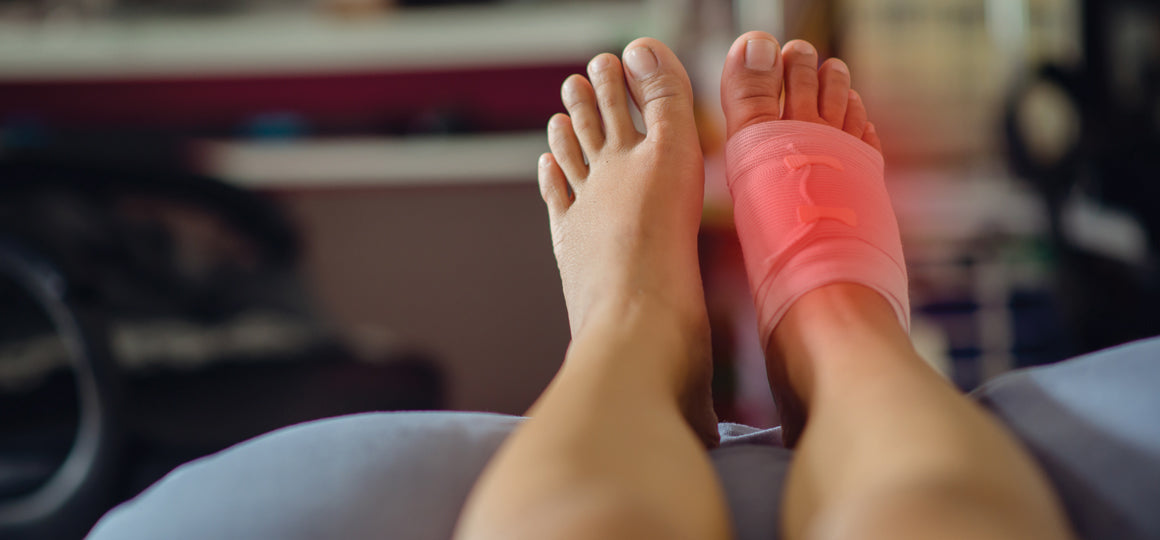
Wrapping your injury can also prevent swelling and relieve pain. Ideally, you want the wrapping to press snugly against the injury, but not so tight that it cuts off blood flow. You can even use wraps or bandages to hold ice packs in place, for a dual solution. Compression wraps like the Black Neoprene Core Wrap are easy to fit over an injury, and you can secure the wrap onto itself with a hook and loop closure.
- Elevation
Elevating the injured body part, preferably over the level of your heart, relieves pain, throbbing, and swelling because it helps drain excess fluid from your injury. For example, if you have a foot injury you can lie down on your couch and put your foot on top of a stack of pillows, or keep your knees elevated with a Core Products® Knee Elevator.
Conclusion
There isn’t an exact timeframe in which your injury will heal itself, and home treatments won’t always be the right solution. If you have a major injury or an injury that is taking too long to heal, you should see a doctor for treatment.